
Last updated September 10, 2026
Level 1 sweep and inspection to the NFPA 211 annual standard - flue, crown, cap, and flashing checked and photographed
Chimney sweep logs do not sweep chimneys. They loosen some creosote - which then falls where a brush and vacuum still have to collect it.
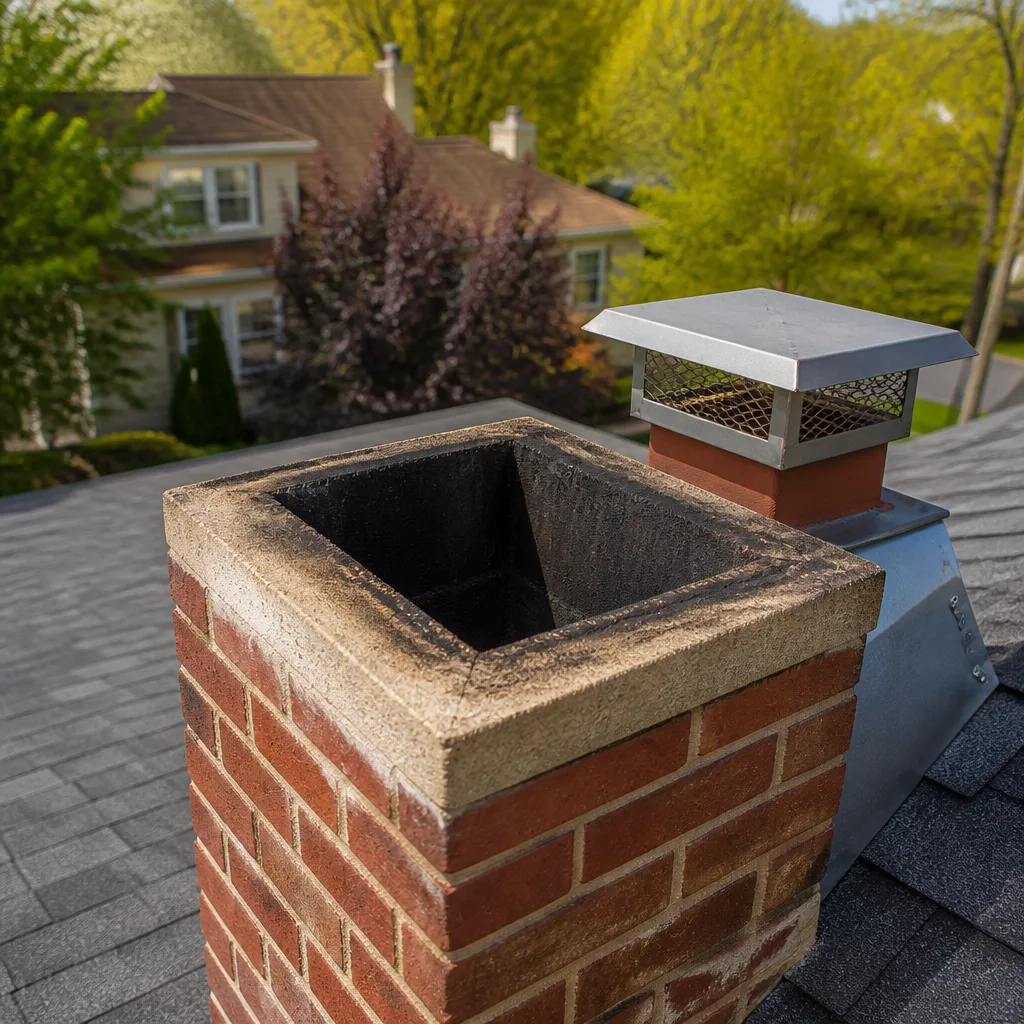
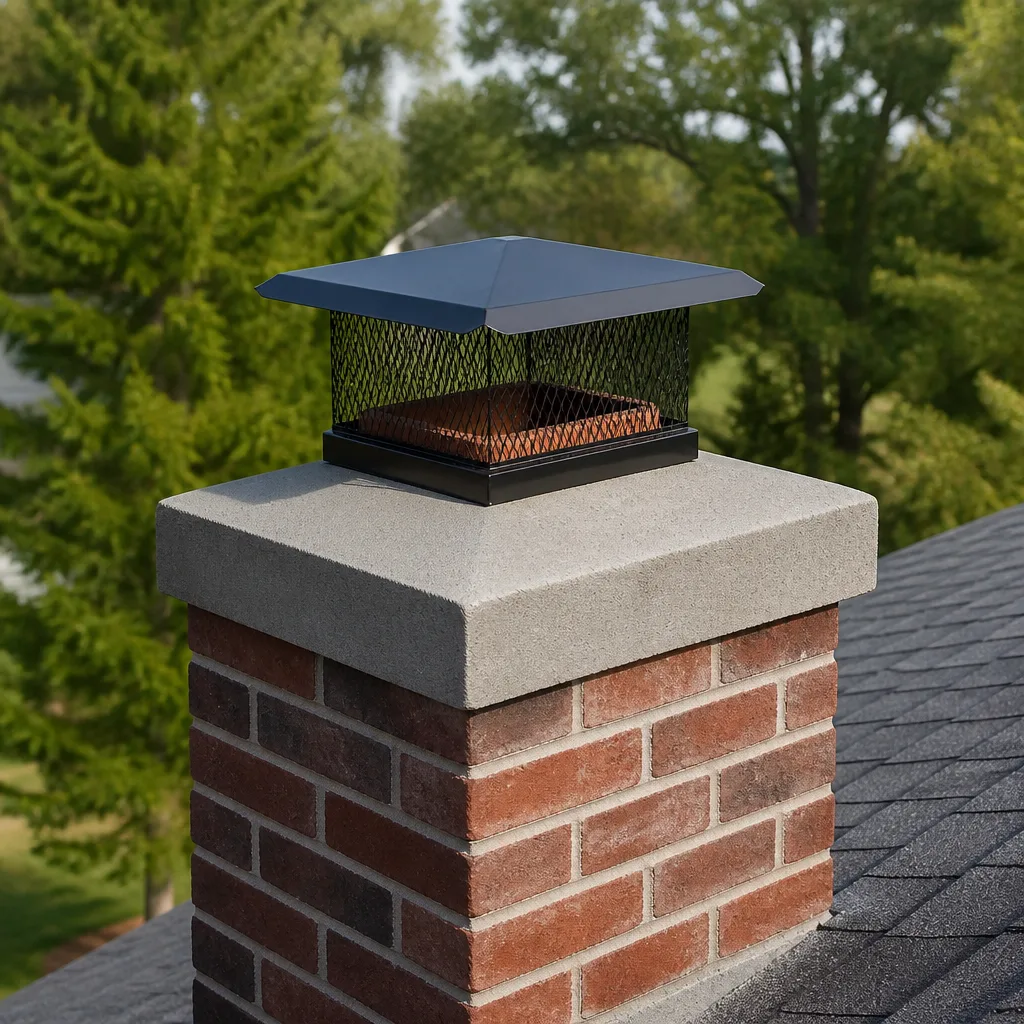
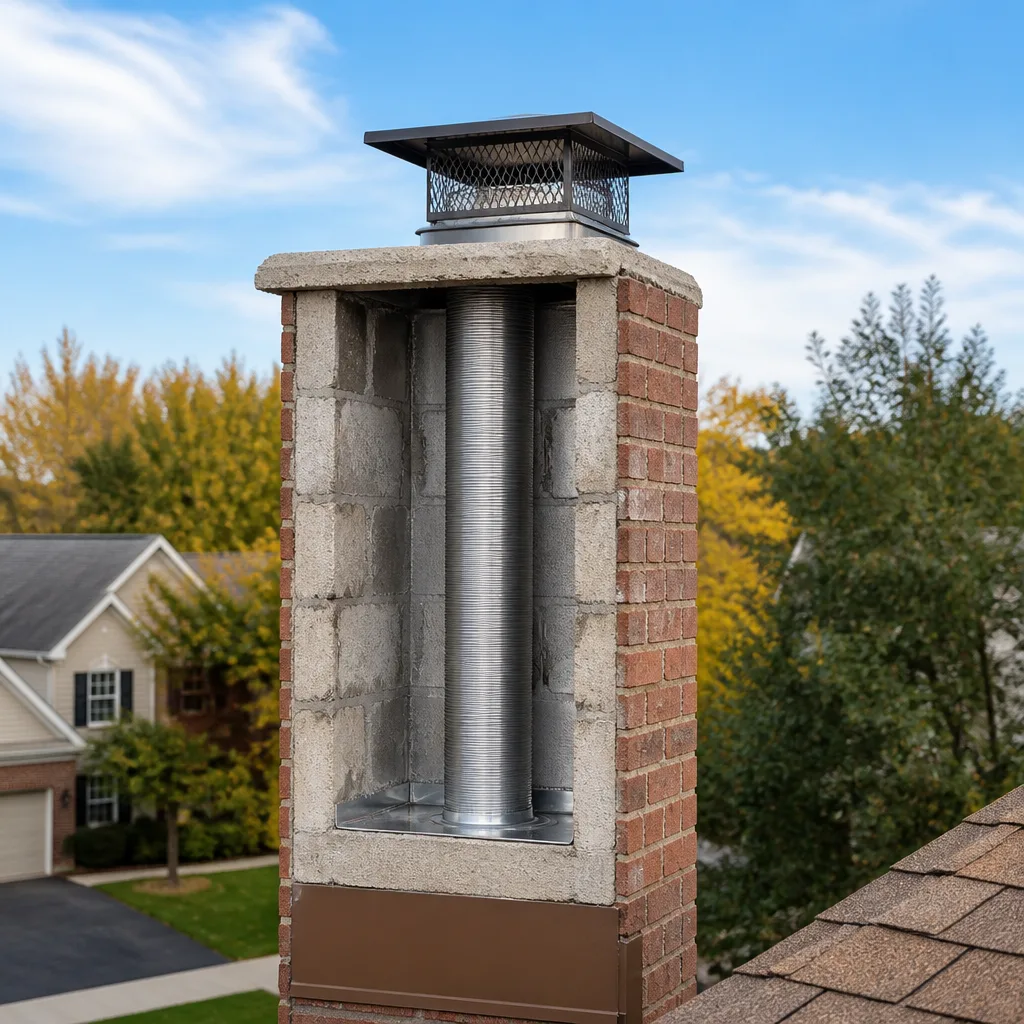
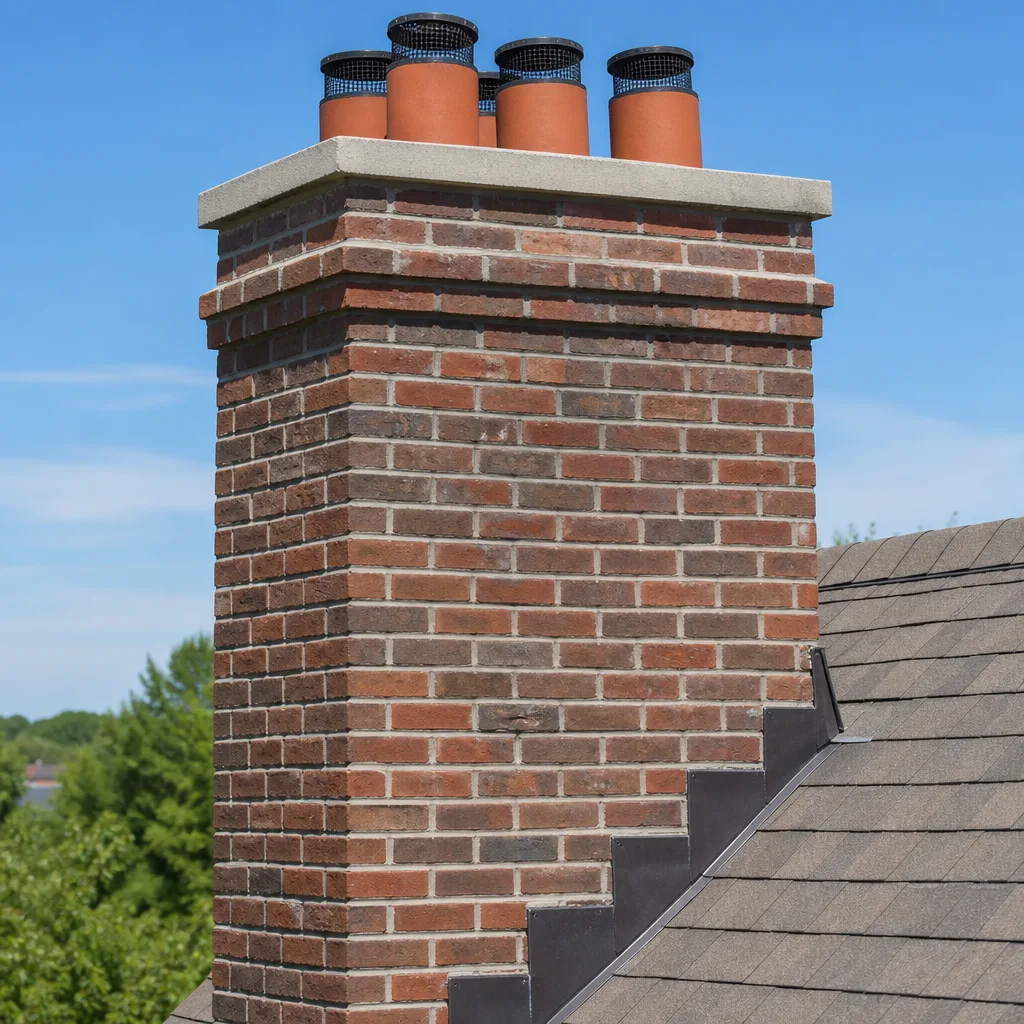
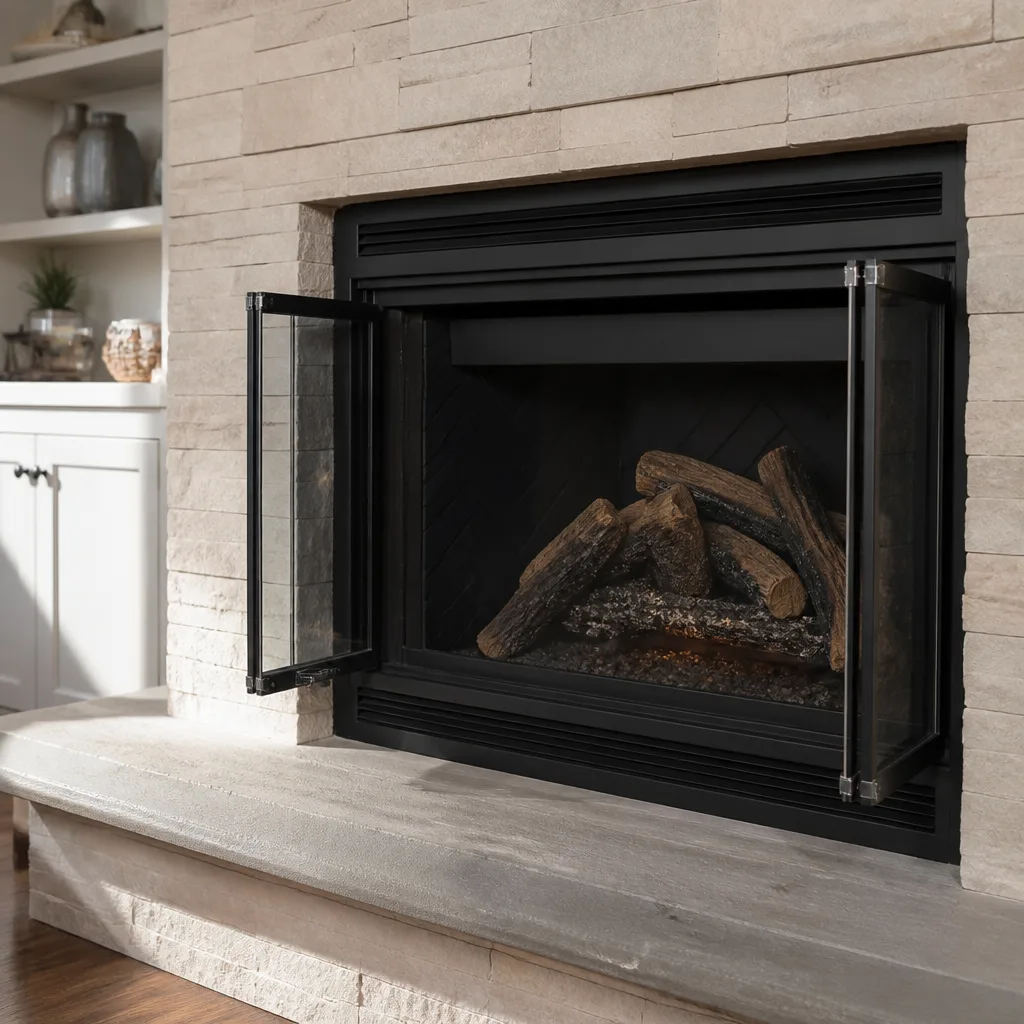
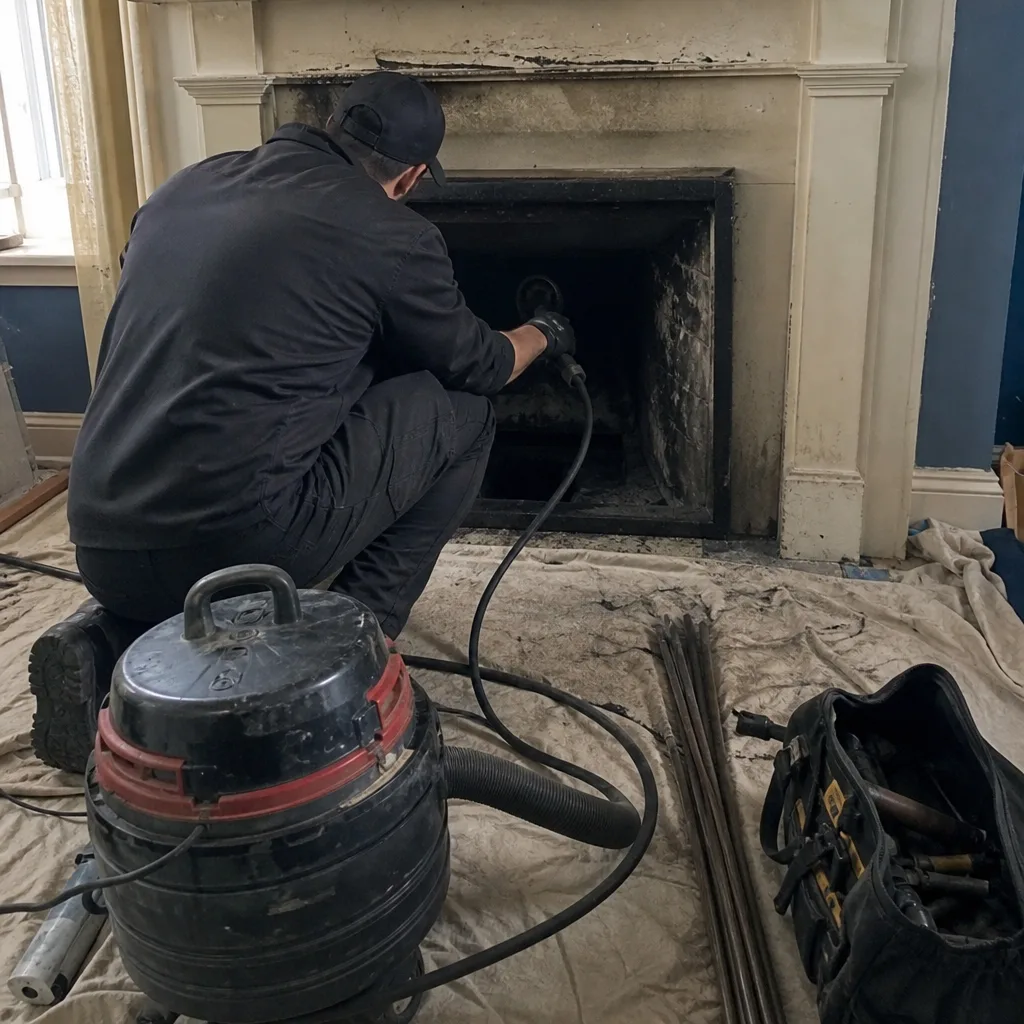 Before
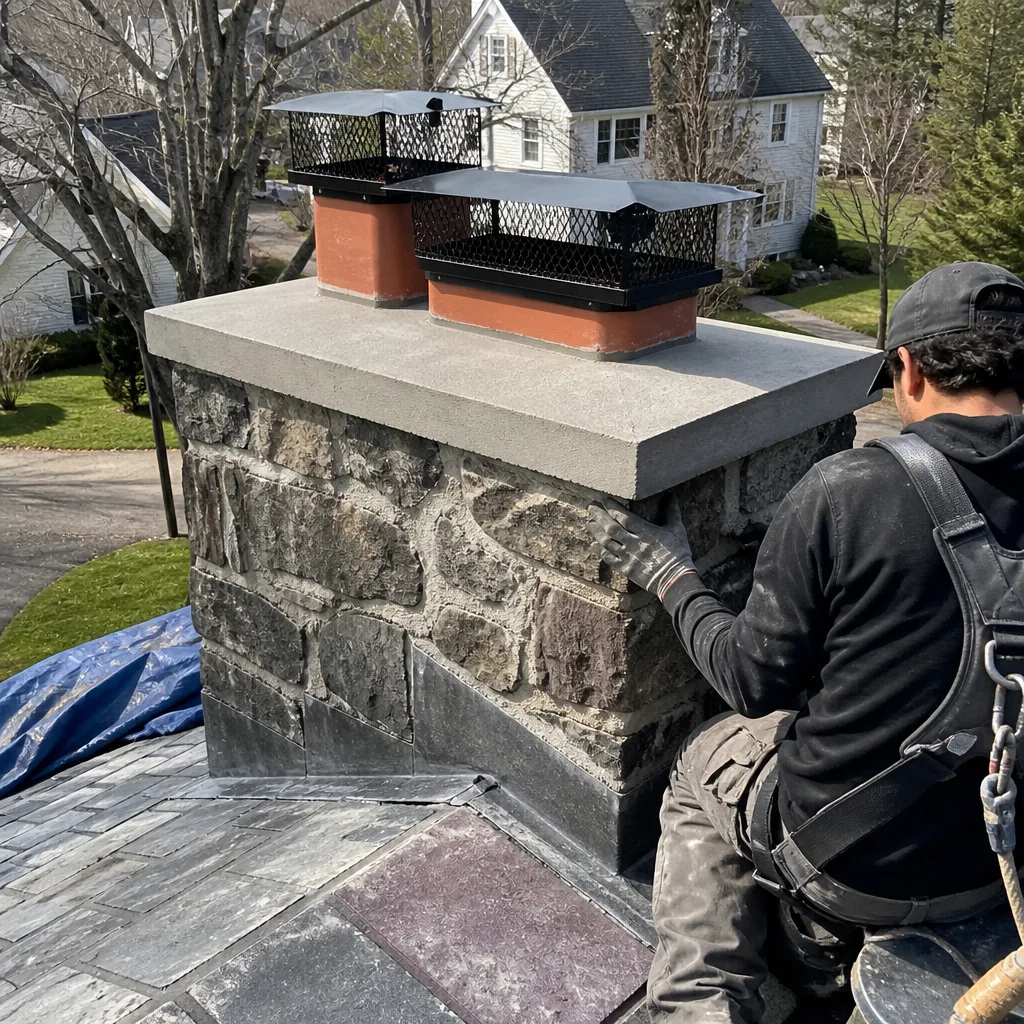 After
After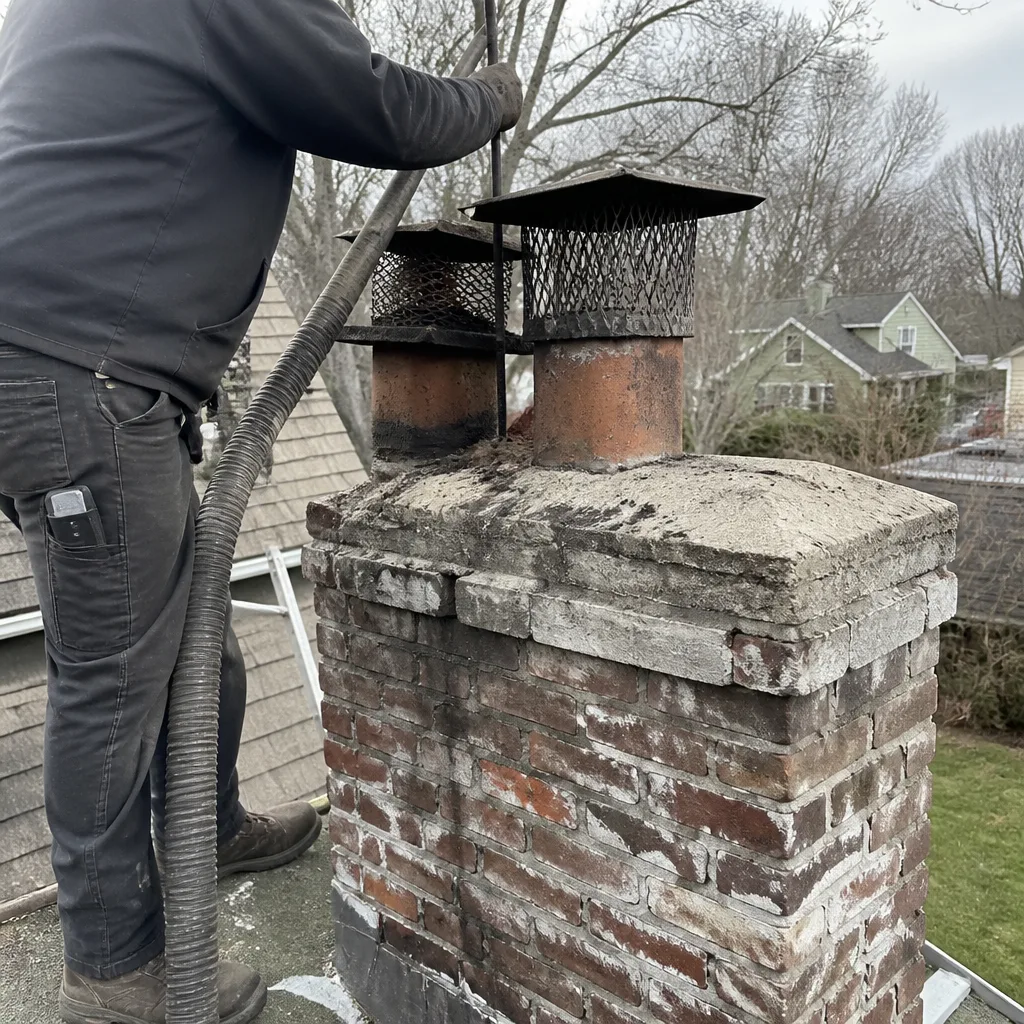 Before
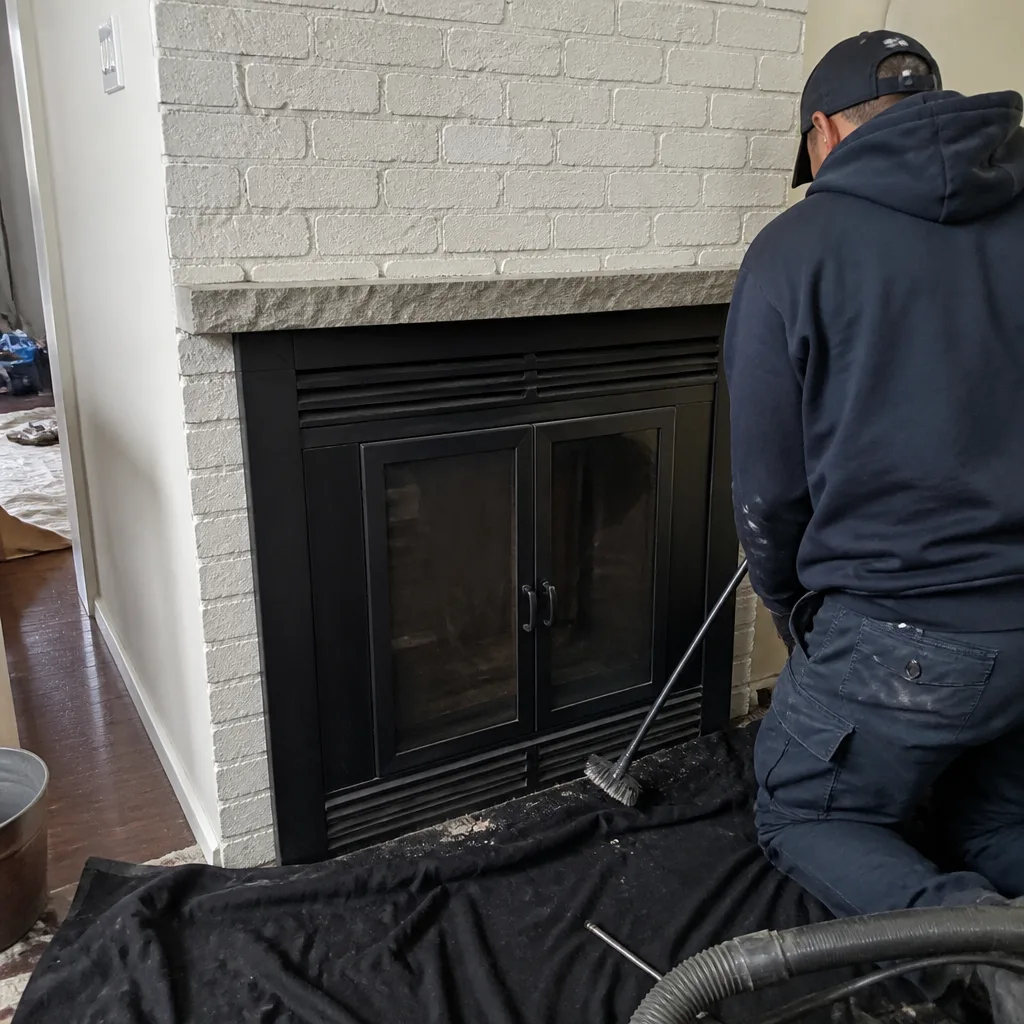 After
After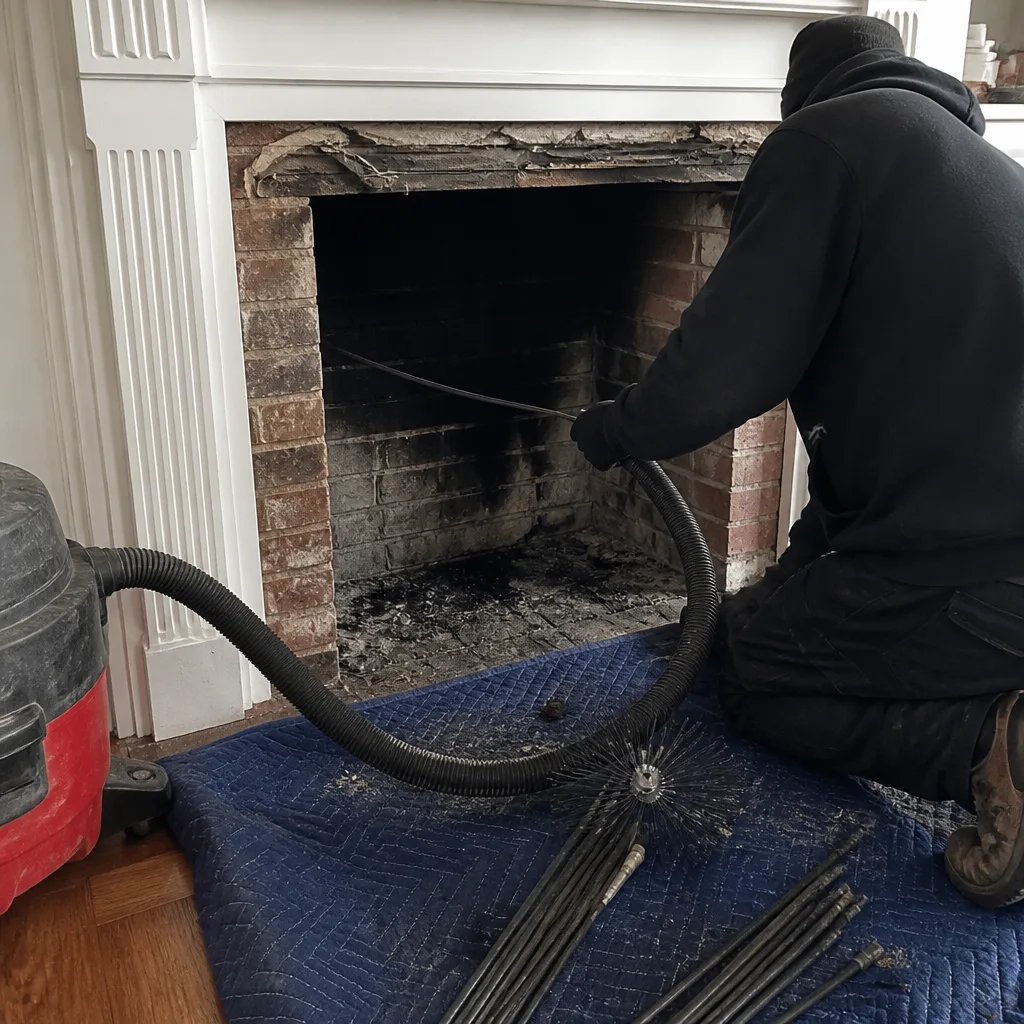 Before
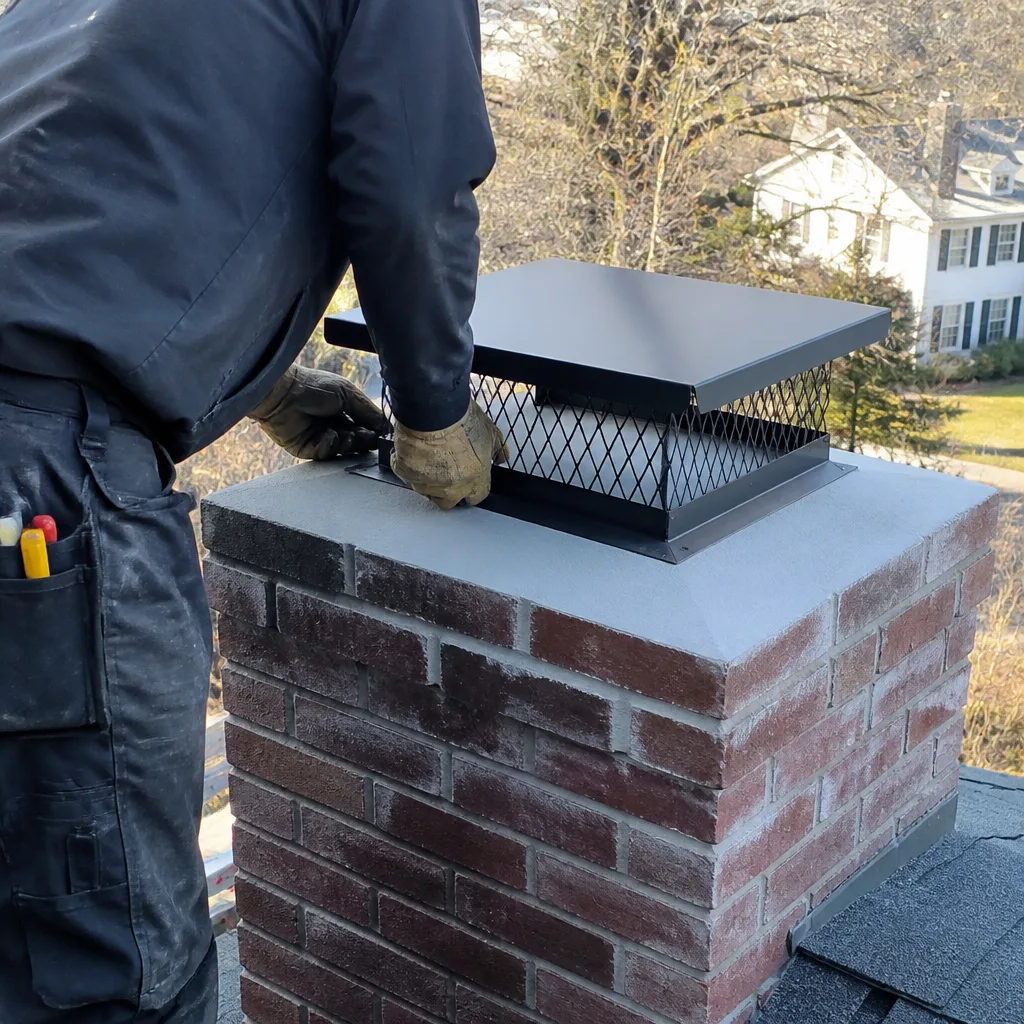 After
AfterDIY vs Professional Chimney Cleaning: The Rye Homeowner’s Decision Guide
Here is a number that surprises most Rye homeowners: a proper chimney sweep removes creosote, yes, but it also finds the problems that have not happened yet. The cracked flue tile behind last season’s soot. The animal nest packed into a smoke chamber. The liner corrosion that will become a house fire in two winters if nobody looks. A DIY brushing gets the black stuff out. It cannot tell you what the black stuff was hiding. The honest answer on whether you should clean your own chimney depends on four conditions specific to your setup: how often you burn, what kind of creosote is in there, whether your flue design lets you actually reach it, and the age and condition of your liner. This guide walks through each one so you can make a decision based on your house, not on a sweep’s marketing or a YouTube video’s confidence. For more guides & resources, see our full blog.
Quick Answer
DIY chimney cleaning can be a reasonable option for Rye homeowners who burn wood occasionally (under a cord per season), have no liner issues, and are dealing with light, dusty Stage 1 creosote only. It is not safe or wise for anyone with glossy Stage 2 or 3 creosote, an oil-burning appliance, a flue that has never been professionally inspected, or clay tile liners over 20 years old. The smartest middle ground for most homes: do light mid-season surface brushing yourself if conditions allow, and schedule one professional inspection every year regardless of how clean things look.
Table of Contents
- What DIY Chimney Cleaning Can Actually Do
- What DIY Brushing Cannot Do (And Why That Matters More)
- The Four Conditions for Safe DIY Brushing
- The Real Cost Comparison: DIY vs. Professional
- When DIY Is Unsafe, No Matter Your Skill Level
- The Middle Ground Most Guides Ignore
- Rye-Specific Factors Most National Guides Miss
- Common Mistakes to Avoid
- When to Call a Professional
- Frequently Asked Questions
- The Bottom Line
What DIY Chimney Cleaning Can Actually Do
A chimney brush on a flexible rod will remove loose, dry creosote from the flue walls if the creosote is still in its early form. That is a fact. First-degree creosote is a fine, sooty powder that comes off with a brush the way dust comes off a shelf. If you burn seasoned hardwoods at hot temperatures and you have not built up a heavy accumulation, a DIY brushing can remove the material that would otherwise eventually fuel a chimney fire.
There is real value in that. The National Fire Protection Association recommends a sweep whenever creosote reaches 1/8 inch of buildup, and for a light-burning Rye household that might mean once a year or even less. If you are burning a fire every weekend from November through March, however, a single annual cleaning may not keep up. That is the scenario where mid-season DIY maintenance starts to make practical sense.
What does a competent DIY job involve? A brush sized to your flue dimensions, enough fiberglass or poly rods to reach the full flue height, a drop cloth around the fireplace opening, a shop vacuum with a HEPA filter to manage airborne soot, gloves, eye protection, a dust mask, and access to the roof top so you can brush from above or below depending on your setup. Then there is disposal. Creosote is considered a hazardous material in many municipalities, and Westchester County guidance favors bagged disposal rather than tossing it in household trash.
Here is the part many guides skip: the honest truth is that a homeowner who reads the brush instructions carefully, checks the weather to avoid working on a wet roof, and takes his time can remove surface soot from a straight flue perfectly well. We have seen it done. We have also seen what happens when someone assumes a straight flue and discovers halfway down that his house has an offset, a damper in the way, or a clay tile liner with rough, sticky patches that grab the brush and make a simple job suddenly treacherous. The difference between easy and risky is rarely visible from the hearth.
What DIY Brushing Cannot Do (And Why That Matters More)
Your flue does not care how the fire looks. It cares how it breathes. A brushed flue looks cleaner from the top but may still be failing in ways a brush cannot detect. That is the gap DIY cannot bridge, and it is the gap that costs Rye homeowners real money when it goes unnoticed.
Here is what a professional Chimney Cleaning & Sweep in Rye does that a DIY brushing cannot:
- Assess liner condition. A camera inspection sees hairline cracks in clay tile, rust scaling on steel liners, gaps at mortar joints, and spalling brick that a brush passes right over. A cracked liner can allow carbon monoxide into the home or heat to reach combustible framing.
- Detect hidden deterioration in the smoke chamber. The smoke chamber sits above the damper and below the flue. It is rarely visible from the top or the bottom without a camera. This is where many chimney fires start because creosote accumulates on the corbelled brick surfaces and nobody sees it.
- Identify animal nesting material. Squirrels, birds, and raccoons build nests in Rye chimneys every spring. A nest can look like a small amount of debris from above but fill a smoke chamber enough to block the flue entirely. A brush will shove that material around; it will not necessarily remove it or tell you whether an animal is still inside.
- Provide documentation for insurance or resale. If you ever file a claim related to a chimney fire, your insurer will ask for records. If you sell your Rye home, some buyers will ask when the chimney was last inspected. A receipt from a licensed sweep with a camera report carries weight. A photo of your dirty shop vacuum does not.
We have lost count of how many times we have found a cracked flue tile or a blocked smoke chamber in a chimney that the homeowner had just brushed himself. The brushing was fine. The brushing was also irrelevant to the actual problem.
The Four Conditions for Safe DIY Brushing
Let us be specific. Here is the framework Wendell uses when a Rye homeowner asks whether he can skip the professional visit and do it himself.
- Low burn frequency. You burn less than one full cord of wood per year. At that rate, creosote accumulation is slow enough that you can stay ahead of it with careful, occasional brushing without risking a heavy glaze forming between sessions.
- Confirmed Stage 1 creosote only. You have verified, ideally with a recent professional inspection, that the creosote in your flue is the dry, dusty kind. First-degree creosote is a brush job. Third-degree is a glaze, catch it early. If you do not know what stage you have, you cannot safely DIY until you do.
- Accessible clean-out and flue design. Your fireplace or stove has an accessible clean-out door at the base, your flue is straight with no noticeable offset, and your damper can be fully opened or removed without tools. If your setup requires disassembling baffles or working around a catalytic combustor, call someone who has done it before.
- No known liner issues. Your liner is either a modern stainless flex liner installed in the last 15 years or a clay tile liner that has been professionally inspected and confirmed intact. If you do not know what your liner is made of or how old it is, that is a single-item reason to schedule an inspection before any DIY work.
If all four conditions are true in your house, light DIY maintenance brushing is a defensible choice. If any one of them is not, the risk calculation shifts hard toward professional help.
The Real Cost Comparison: DIY vs. Professional
Most DIY vs. professional articles compare a $60 brush kit at the hardware store with a $250 professional sweep and declare victory for DIY. That math is incomplete. Let us do it properly for Rye. See our Chimney Cleaning Cost Breakdown: The Rye Homeowner’s Reference for 2026 for full pricing details.
A decent DIY chimney brush kit sized for a typical Rye flue runs $45 to $90. A fiberglass rod set for a two-story chimney runs $60 to $120 if it is not included. A HEPA-rated shop vacuum filter runs $35 to $60. A respirator with P100 filters, $30 to $50. Drop cloths and tape, $20. Disposal bags rated for creosote, $15 to $25. Total upfront: roughly $200 to $350, and that is before you value your time.
Now add what the kit does not include. A camera inspection of the flue interior runs $100 to $200 as a standalone service depending on the sweep. A creosote log is not a substitute for brushing, regardless of what the packaging implies. And the professional sweep brings a truck with a HEPA vacuum that keeps soot out of your living room, which matters more than most people expect.
Here is the math that changes the conversation:
- Professional sweep in Rye: $200 to $350, including your first camera inspection, same day, with documentation.
- DIY kit cost: $200 to $350 once, plus four to six hours of your time on a roof in weather you may not enjoy, plus the value of what you are not finding.
- One missed repair finding: A cracked flue tile left open for two winters becomes a liner replacement or a smoke chamber rebuild. That runs $2,000 to $6,000 depending on the house. A chimney fire costs far more than that.
The point is not that DIY is never worth it. The point is that the savings people imagine are based on incomplete math. The kit costs more than most guides admit, and it does not include the thing with actual financial weight: the early detection of something expensive. A $300 sweep that finds a hairline crack in a clay liner pays for itself fifty times over. A $200 DIY kit that finds nothing leaves you exactly where you were, minus the $200 and the Saturday.
When DIY Is Unsafe, No Matter Your Skill Level
There are scenarios where we will be blunt even though it sounds like a sweep defending his profession. These are the conditions where DIY brushing is a bad idea regardless of how handy you are or how carefully you read the instructions.
- Stage 2 or 3 creosote. Glossy, tar-like Stage 2 creosote cannot be brushed out effectively. It requires chemical treatment or mechanical removal with a rotary chain whip, and worse, it conceals the liner condition beneath it. Third-degree creosote is a hard glaze that sometimes has to be chipped away without damaging the flue underneath. If you do not know the difference between stages, assume you should not be the one making the call.
- Oil-burning appliances. If your home has an oil-fired furnace or boiler venting through the chimney, that flue is not a weekend project. Oil soot is acidic, the deposits are often hard and corrosive, and getting the creosote composition wrong can create a serious fire hazard. This is not a wood-burning fireplace situation, and it is not the time for a brush from the hardware store.
- A flue that has never been professionally inspected. This one is important. If the inside of your flue has never been seen by a camera, you are not starting from a known condition. You could be brushing a liner that is already cracked, already leaking, already compromised in ways that make vibration from a brush or the weight of a person on the roof a genuine risk.
- Clay tile liners over 20 years old. Clay tiles crack over time, especially in Rye’s freeze-thaw cycles. A 20-plus-year-old clay liner that has seen regular use is likely to have hairline cracking even if the fireplace still drafts fine. Brushing a cracked clay liner can knock loose broken pieces, and more importantly, brushing it gives a false sense of security because the brush removes soot while the cracks remain. If your clay liner is over two decades old and has never been camera-inspected, skip the DIY and get it looked at first.
Working on a roof, even a dry one, involves height risks. Add a chimney brush, a second story, and Rye winters, and you have a scenario where the most experienced DIYer should think twice. We would much rather tell you the chimney can safely wait until spring than have you on a wet, frozen roof in December.
The Middle Ground Most Guides Ignore
Most articles present a binary: either you pay a professional every time or you become your own chimney sweep. That is a false choice, and it is not the way Wendell actually advises Rye homeowners to approach things.
The sensible middle ground for many homes looks like this:
- Schedule one professional inspection every year. Once a year, burn or no burn. Chimneys break in the off-season too. The inspection establishes your baseline, documents liner condition, and catches things the brush cannot. This is the non-negotiable piece.
- Do light mid-season surface brushing if your four conditions check out. If you burn a lot, a light surface brushing between professional visits can keep the creosote from reaching dangerous thickness. This works because your annual inspection already confirmed Stage 1 creosote and an intact liner, which means the DIY brushing is true maintenance rather than blind work.
- Keep a simple log. Note the date you burned, how much you burned, what kind of wood, and what you saw when you brushed. When the annual inspection comes around, hand that log to your sweep. It changes the conversation from a generic visit to a specific look at how your burning habits are affecting the flue.
This split works for homes that burn heavily and want to manage creosote between professional visits. It does not work in reverse: skipping the annual inspection and only brushing DIY means you are cleaning the visible surface while the invisible structure goes unwatched. That is how Rye homeowners end up with a $4,000 liner replacement they could have caught as a $400 repair.
Rye-Specific Factors Most National Guides Miss
Most chimney advice on the internet is written for a national audience. It does not mention that Rye sees the kind of winter precipitation that alternates freeze and thaw against masonry, that many Rye homes date from the 1920s through the 1960s with original clay tile liners, or that the salt air from Long Island Sound is a real corrosion factor for metal components like caps and dampers. Those details change the timing and the stakes.
Rye’s older housing stock means many homes have chimneys built to mid-century standards that predate modern liner requirements. A clay tile liner installed in 1960 has spent over sixty winters absorbing moisture that freezes and expands. The cracks that result are not rare; they are the expected condition of the material. In our experience across Rye neighborhoods, a homeowner with an original clay liner should not assume anything about its condition based on how well the fireplace draws. Draft is not the same as integrity.
Rye’s winter burn season runs longer than the national average, which means creosote accumulates faster for active burners. If you burn regularly from October through April, you are putting enough particulate through the flue that a single annual sweep may not keep up, and you may genuinely benefit from that mid-season DIY surface brushing under the right conditions. The key is having the annual professional inspection first so the DIY part is not done blind.
One more local consideration: Westchester County does not have a countywide chimney inspection mandate for home sales, but many Rye buyers request a chimney inspection as part of the purchase contingency. Sellers who have maintained a file of annual sweep records and camera reports sail through that request. Sellers who cannot produce documentation often negotiate a credit or take a price hit that dwarfs the cost of a decade of sweeps. If you are in Rye and planning to sell in the next few years, the professional inspection record is itself worth more than the cleaning.
With all this said, when a Rye homeowner calls us and asks about doing the work themselves, Wendell often tells them the truth: some of this work you can handle, and some of it you should not. The judgment to know which is which is exactly what Top Hat Chimney home has been helping Westchester homeowners figure out since 1999.
Common Mistakes to Avoid
- Buying a brush kit without measuring the flue first. Brushes come in specific sizes matched to flue dimensions, typically 6, 8, 10, or 12 inches for rectangular flues and matching diameters for round liners. A brush that is too small will not clean effectively; one that is too large can jam, and a jammed brush in a clay liner is a service call you did not plan for.
- Using a creosote log as a substitute for brushing. The logs can chemically convert some creosote to a drier form that falls away, but they do not remove bulk accumulation and they do not inspect anything. In our experience, homeowners who rely on them tend to delay the real sweep longer, which means the real problem grows.
- Brushing from the roof without a spotter. Rye roofs are not friendly in November through March. Even a dry day can have moss or old slate that is slick. If you insist on working from the roof, have someone on the ground who can see you and call for help if something goes wrong.
- Assuming a clean-looking fireplace means a clean flue. The fireplace opening can look fine while the flue above it is glazed with tar-like creosote. You cannot judge flue condition from the hearth, and you cannot judge it from the roof opening either. Only a camera run confirms what is actually in there.
- Skipping the annual inspection because you did a mid-season brush. The DIY brush removes visible soot. It does not inspect the liner, the crown, the flashing, the damper, or the smoke chamber. The annual professional Chimney Repair in Rye visit is about the next five years, not just this season’s soot.
- Using a shop vacuum without a HEPA filter. Standard shop vac filters spray fine soot and creosote dust through the room. That dust is not just dirty; creosote dust is an irritant and a potential health concern. Use a HEPA filter and consider a negative air setup if you are doing this inside the home.
- Waiting until peak burn season to decide the chimney needs attention. November through January is when every sweep in Westchester is booked solid, and it is also when the urgent calls come in. Schedule your annual inspection in the spring or summer. Chimneys break in the off-season too, and the off-season is exactly when a Fireplace Services in Rye visit is easiest to book.
When to Call a Professional
Call a professional if any of these apply to your Rye home: you see glossy, tar-like buildup in the flue, you smell something unusual from the fireplace during humid summer days, you have never had a camera inspection, your chimney is over 20 years old and the liner is original clay tile, you have an oil-burning appliance venting through the flue, you see animal activity around the chimney cap, or you are buying or selling a home and need documentation. Any one of those is enough to make the professional visit the right call. Top Hat Chimney offers free estimates in Rye, and Wendell answers the phone himself much of the time. Call (914) 685-6096.
Frequently Asked Questions
A professional chimney sweep in Rye typically runs $200 to $350 for a standard fireplace cleaning with a basic inspection. The price varies based on flue height, creosote stage, whether the chimney has been maintained regularly, and whether a camera inspection is included. A camera inspection adds $100 to $200 when billed as a standalone service but is often bundled with the sweep. Top Hat Chimney provides upfront pricing before work begins, so the number you hear on the phone is the number on the invoice. Call (914) 685-6096 for an exact quote.
The National Fire Protection Association recommends a sweep whenever creosote reaches 1/8 inch of thickness, and for most Rye homeowners who burn recreationally, that translates to once per year. Heavy burners who use the fireplace as a primary heat source from October through April may need two sweeps per season, plus light mid-season surface brushing if their conditions allow. The annual professional inspection should happen regardless of how much you burn. Once a year, burn or no burn.
Yes, under specific conditions: low burn frequency, confirmed Stage 1 creosote only, an accessible straight flue with a clean-out, and a known-intact liner. If all four conditions are true, light brushing is a reasonable maintenance task for a careful homeowner. If any one is not, the risk of missing something serious outweighs the labor savings. Most Rye homes we see fall short on at least one condition, usually the confirmed liner condition, which means the honest answer is often “not safely until you have had one professional inspection.”
Cracked clay tile liners in older homes. Rye has a lot of pre-1970 housing stock with original clay liners, and those liners have spent decades absorbing moisture from freeze-thaw cycles and the salt air of the Sound. A camera inspection will frequently show hairline cracking that does not affect draft but does create a pathway for carbon monoxide or heat transfer. A DIY brushing cannot see those cracks because they are behind the soot and the brush does not reveal them.
No, and any sweep who tells you that on the first visit without camera evidence is not being straight with you. The right standard is simple: never accept a liner recommendation without seeing the camera footage yourself. If the footage shows a cracked tile, the condition is real. If the sweep cannot show you the crack, get a second opinion. Top Hat Chimney provides the camera footage and a plain-English verdict on every job, no exceptions, and we will tell you plainly when a liner can safely wait.
It depends on how much you have burned, what kind of wood, and what kind of creosote has accumulated, but the honest answer is that two years of unmaintained burning is exactly the scenario where we recommend a professional inspection before your next fire. The risk is not just a chimney fire; it is carbon monoxide exposure from a partially blocked flue or a cracked liner that was never discovered because nobody looked. The cost of the inspection is a small fraction of what a chimney fire or a CO event can cost. Call us before you burn again.
The Bottom Line
DIY chimney brushing is not a scam and it is not a safe default. It is a maintenance option with narrow conditions: light burning, Stage 1 creosote, an accessible flue, and a known-intact liner. Outside those conditions, you are not saving money; you are deferring a problem into a worse one. The one non-negotiable is the annual professional inspection. Whatever you decide about DIY brushing, do not skip the camera run once a year. That single visit is where the money gets saved or lost, and it has been true in every Rye chimney we have opened since 1999.
Ready to get your chimney inspected before burn season? Top Hat Chimney serves Rye and the surrounding Westchester County communities with upfront pricing, camera inspections on every job, and the 90-Day Done Right Promise in writing. Call (914) 685-6096 for a free estimate, or ask for Wendell.
Written by Wendell Pike, Owner at Top Hat Chimney, serving Rye since 1999.